
Your first Umrah is a big moment. It is also a trip with a lot of paperwork and a lot of walking, so a little preparation goes a long way. This guide covers the practical side step by step, so you can spend your energy on the worship itself.
1. Passport, visa and documents
Check your passport first. It should be valid well beyond your travel dates and have blank pages. Your operator will confirm the exact validity needed.
Indian pilgrims cannot apply for an Umrah visa on their own. The application goes through a licensed operator, and the Saudi Ministry of Hajj and Umrah now requires hotel and transport to be booked and verified on its Nusuk platform before a visa is issued. Umrah visas also have a limited window in which you must enter Saudi Arabia, so do not get the visa long before you travel. Rules change from season to season, so ask your operator for the current details.
Keep these with you, as paper copies and on your phone:
- Passport and visa
- Flight tickets and hotel confirmations
- Vaccination certificate
- Passport-size photos
- Emergency contacts, and your operator’s phone number
- Any regular medicines, with a doctor’s note
2. Book with a registered operator
Book only with an operator that is licensed to arrange Umrah. Ask to see their registration, ask what exactly the package includes (flights, hotels, distance of the hotel from the Haram, transport, meals, visa), and get it in writing. Be careful of prices that are far lower than everyone else. Saudi Arabia lists accredited service providers on its official Nusuk Umrah platform (umrah.nusuk.sa).
3. Health and vaccinations
The Saudi Ministry of Health publishes its requirements each year. For 1447H (2026), it says all people travelling for Umrah, from every country, need to be vaccinated against meningococcal meningitis with a quadrivalent (ACYW) or pentavalent (ACYWX) vaccine. A conjugate vaccine must be taken within the last 5 years and at least 10 days before arrival. A polysaccharide vaccine must be taken within the last 3 years and at least 10 days before arrival.
The same document lists polio and yellow fever requirements for people arriving from certain countries, and COVID-19 proof for some higher-risk groups, such as people over 65, pregnant women and people with certain chronic conditions. The country lists and rules can change, so read the latest version of the Ministry of Health document or ask your operator before you travel. If you have a long-term health condition, speak to your doctor well before the trip.
4. Ihram and what to pack
Ihram is the state of consecration you enter before the rites begin. Men wear two pieces of unstitched white cloth. Women wear their normal modest clothing, with the face and hands uncovered during ihram. Many pilgrims enter ihram at the meeqat or before boarding the flight, so ask your guide where and when to make your intention.
Pack light. Useful things include:
- Two sets of ihram cloth and a belt (for men)
- Comfortable, loose clothes and a light jacket for air-conditioned places
- Very comfortable slippers or sandals, plus walking shoes
- Unscented soap and toiletries (scent is avoided in ihram)
- A small bag or pouch for your slippers, and a small day bag
- Power bank and charger
- Regular medicines, a basic first-aid kit, blister plasters, a hat or umbrella, a reusable water bottle
5. Flights and arrival
Expect a long day. After landing in Jeddah or Madinah, you go through immigration, collect your bags and take transport to your hotel. This can take several hours at busy times. Keep your documents together and within reach, charge your phone before landing, and stay patient. Your operator or guide should tell you where to meet before you travel.
6. The Umrah rites, step by step
- Ihram: enter the state of ihram from the meeqat with the intention for Umrah, and recite the talbiyah.
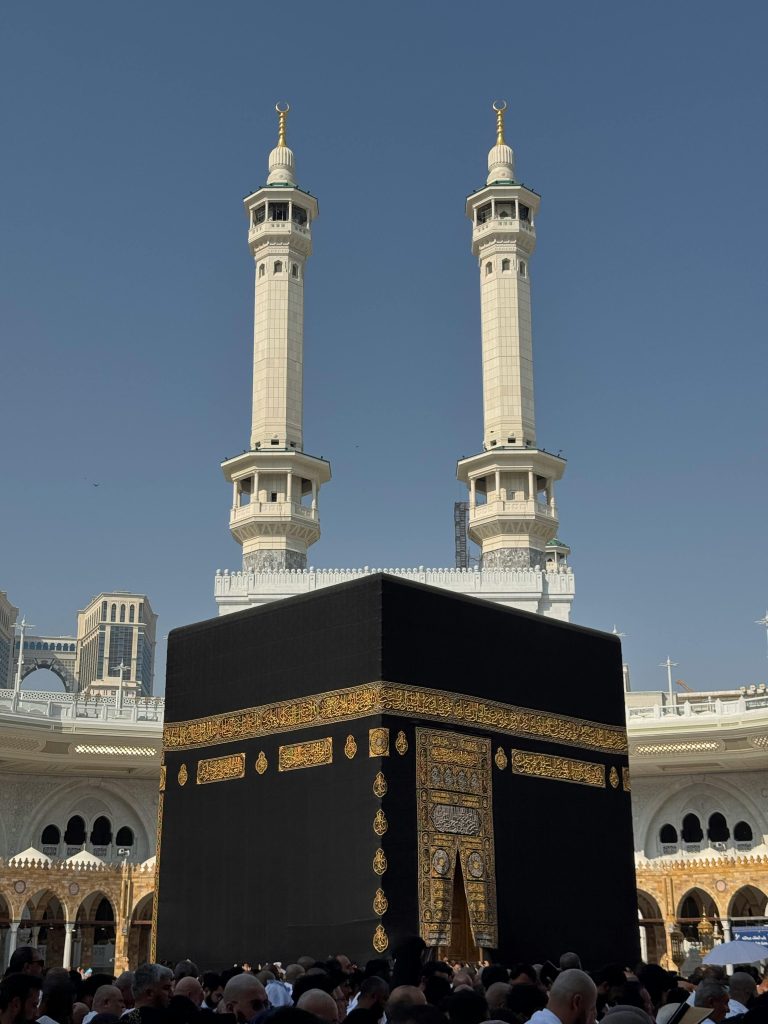
- Tawaf: on reaching the Haram, circle the Kaaba seven times, anticlockwise, starting from the line of the Black Stone. Then pray two rak’ah, ideally behind the Maqam Ibrahim if space allows, and drink Zamzam.
- Sa’i: walk seven laps between the hills of Safa and Marwa, starting at Safa and ending at Marwa.
- Halq or taqsir: men shave the head or trim the hair. Women trim a small length of hair from the ends. This completes Umrah, and you leave the state of ihram.
Dua and dhikr are your choice, and you do not need to memorise long texts. If you are unsure about a detail of the rites, ask a qualified scholar or your group’s guide before you go, and follow your own school of thought.
7. Practical tips
- Money: carry some Saudi riyal in small notes. Cards work in many shops and hotels, but have cash for small buys. Check your bank’s foreign card rules before you leave.
- SIM and data: buy a local SIM or an international roaming pack so you can reach your group.
- Weather: it is very hot for much of the year, so drink water often. Winter evenings can be cool.
- Footwear: go with something light and easy to carry, and note where you leave it. Slip-ons are easiest.
- Crowds: choose off-peak hours for tawaf if you can, and stay close to your group members. Agree on a meeting point in case you get separated.
- Rest: your body will be tired. Sleep when you can, and do not rush every rite in one day.
8. Mistakes first-timers make
- Booking with an unregistered agent or an unclear package
- Leaving vaccinations and passport checks to the last week
- Packing too much, then struggling with bags
- Wearing new shoes and getting blisters before the rites
- Not drinking enough water in the heat
- Going alone to the Haram without noting the gate number or a meeting point
- Worrying about perfect form instead of asking a guide, calmly, when in doubt
Final thoughts
Prepare your papers early, keep your plans simple and give yourself time to rest. The rest, with sincerity and patience, will come naturally. May your Umrah be accepted.
Sources: Saudi Ministry of Health, Health Requirements and Recommendations for Travelers to Saudi Arabia for Umrah, 1447H (2026); Nusuk Umrah platform. Always confirm current rules with your operator and official sources before travelling.